
The Department of Telecommunications is planning to give more powers to the telecom regulator, Telecom Regulatory Authority of India, in the new telecom policy, including the power to impose financial penalties on the erring telecom service providers.

The action plan is supposed to focus on measures that state governments will take in reducing the carbon footprint and greenhouse gas emissions, besides adopting a low carbon development path.

The New Telecom policy 2011 and the Spectrum Act are expected to address these concerns.

Call it the urge for double income or a stress buster, most sites have seen higher registrations during downturns.

The exercise is ostensibly for security reasons and to prevent misuse of the freedom of speech in cyberspace.

It hopes a significant part of its growth in India would come from the government sector, with the thrust on e-governance initiatives.

The new telecom policy-2011 is also expected to come out with new norms for mergers and acquisitions, enhancing rural coverage, and spectrum allocation, among other things.

This means the regulator can bring rates under regulation once again. Currently, the rates are determined by market forces.

The state government's water resources department has alleged the company's Jharsuguda unit has not paid Rs 10.94 crore (Rs 109.4 million) of its bills, since 2008.

Industry chieftains, strategists and analysts were unanimous that a slowdown, if at all happens again, won't affect the prospects of the $17-billion industry.

Be it soft drink ones such as Coca-Cola, beer maker SABMiller or packaged water firm Bisleri, they are all measuring the water consumed for bottling every litre of their retailed drinks, trying to cap this and replenish the sources.

In talks with Nigeria, Kenya & Niger for development of transmission system.

Firm ready to accept the five preconditions specified by environment ministry.

The issue of which technology to use in wireless broadband services, TD-LTE or WiMax, is becoming keener.

This will enable security agencies to tap any call, real-time chat and data without help from the operators.

The Department of Telecommunications (DoT) has proposed to simplify the country's telecom landscape. It has suggested one tariff for each licence holder across the country, all-India mobile number portability and doing away with roaming charges.

In what could give a big relief to new mobile players, the Department of Telecommunications (DoT) is unlikely to cancel 53 licences - as recommended by the Telecom Regulatory Authority of India (Trai) - for non-fulfilment of rollout obligations.

DoT has set up a committee to frame the proposed Act, which will have seven members with retired judge Justice Shivraj Patil as its chairman.
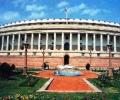
This is part of the government's plan to raise Rs 40,000 crore (Rs 400 billion) from disinvestment in the current financial year.

The broad idea was endorsed by the DoT's internal panel in its report on the Telecom Regulatory Authority of India's recommendations last year on spectrum management and other licensing issues.
 © 2026 Rediff.com - Advertise with us - Disclaimer - Privacy Policy - Sitemap - Feedback - About us - Terms of use - Grievances